Share Alden Kirby Congdon's obituary with others.
Invite friends and family to read the obituary and add memories.
Stay updated
We'll notify you when service details or new memories are added.
You're now following this obituary
We'll email you when there are updates.
Select your format and elements to print
IN LOVING MEMORY OF Alden Kirby Congdon
Alden Kirby
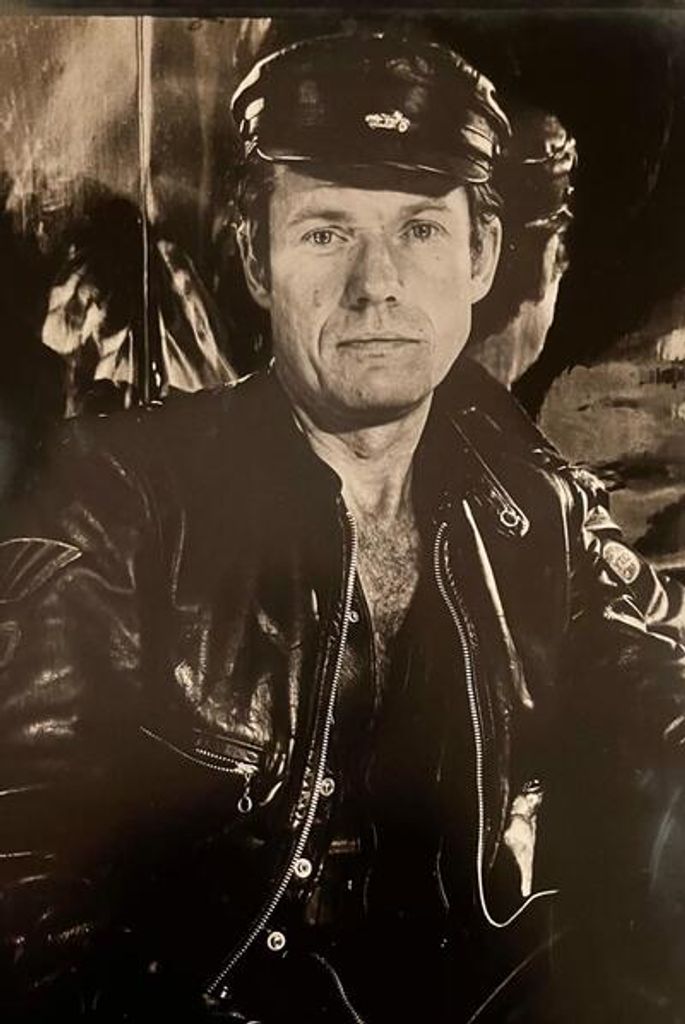
Congdon
Nov 13, 1924 — Jun 1, 2023
KEY WEST
Alden Kirby Congdon's Obituary
Alden Kirby Congdon, poet, editor, artist, and publisher to the Beat and Counterculture movements of the 1950s and 1960s, has died. He was ninety-eight years old.
Kirby was born in West Chester, Pennsylvania in 1924, to William Congdon and Ragna Jorgensen Congdon, a Norwegian emigre. The family moved to the Arcadian environs of Old mystic, Connecticut in 1935, where Kirby spent the remainder of his childhood. He was a self-possessed boy, who eschewed group activities and sports in favor of exploring local landscapes, writing poetry, and playing his beloved piano.
During World War II, at the age of nineteen, Kirby was drafted into the United States Army, where he trained as a sharpshooter and expert gunner. He was deployed to Central Europe in 1945. He largely avoided the "vulgar" banter of his fellow soldiers, preferring to spend furloughs sketching castles and villages in the Bavarian countryside, and working at pianos in shelled, abandoned homes, that his colleagues would find for him. At a time when the United States Government and its military were enacting criminalizing edicts against gay service personnel, Kirby fought Nazi snipers to defend and expand the democratic freedoms that he would, only by virtue of his longevity, see come to fruition seventy years later with the establishment of equal rights and protections for LGBTQ+ citizens, such as gay marriage.
A stint at the Army College in Biarritz influenced him to take up higher education, and upon his return to the United States he attended Columbia University in New York City, on the GI Bill. There, he studied English, philosophy, and literature, earning a Bachelor of the Arts degree—although he retained a disregard for formal education in favor of unfettered individualism. In the following decades, Kirby came to know many Beat poets, writers, and artists including Allen Ginsberg, Gregory Corso, Jack Micheline, Lawrence Ferlinghetti, Jack Kerouac, Tennesse Williams, Andy Warhol, and Peter Hujar. He was a habitué of the East Village scene and Greenwich Village coffee houses and bars where poets and writers gathered. Later, through his own small press endeavors, Interim Books, and Cycle Press, he would publish the work of most of the poets associated with this era.
Kirby came of age as a gay man in late 1940s and early 1950s New York, when homosexual activity was still illegal. In his diaries from that time he redacted the surnames of acquaintances and sexual partners, so that in the event of theft or loss, they would not be of use to authorities. He learned the etiquette and locales of the city's gay underground, developing a network of friends, lovers, and favored clubs, while also reveling in the rich cultural life that New York offered. He worked as a speed-typist and administrator for publishers and department stores, and used those skills to put out various periodic magazines. Otherwise, his time was dedicated to the development of his poetry. With a note of grandeur, Kirby would often set aside a portion of his modest income, for cocktails at the Plaza Hotel, or a "good supper" at a favorite restaurant. A keen biker, and leather fetishist, he was a member of the New York Motorcycle Club, and rode his own metallic steed until he was eighty years old.
Prolific, and furiously ambitious for his creative work, he sent thousands of submissions to magazine editors throughout his life, and produced dozens of volumes, books, and collections. His poems were published widely and nationally from chapbooks and journals to The New York Times, New York Herald Tribune, and Christian Science Monitor. This gained him a substantial reputation in literary circles, if not the universal fame he longed for.
In 1986, he left New York, to spend summers in Fire island Pines and winters in Key West, with his then partner Ralph Simmons Jr. It was a routine that he would maintain for the next thirty-three years. His commitment to "being creative" never waned. He continued to write poetry, plays, essays, and articles. He was a keen and deftwatercolorist, and exhibited his paintings and sculpturesin New York and Florida. He was honored as the inaugural Poet Laureate of Key West, he published a regular column in the Key West Blue Paper, and read as the featured poetat the 2014 Frank O'Hara Poetry Festival on Fire Island,and at the annual Elizabeth Bishop Celebration in Key West. Well into his nineties Kirby cut an elegant figure on his morning walks around Old Town, checking parking meters for change along the way—a practice that once netted twenty-five dollars, with which he bought his first television.
Kirby grew up during the Great Depression, survived the 1938 New England Hurricane, fought for his country, established his artistic and gay selfhoods despite dangerous social conditions, lived through the AIDS Crisis, the Covid Pandemic, and for a moment, it seemed he might even prevail over mortality itself. Such tenacity and vitality are hinted at in the concluding line of one of his poems: "It's only the dead that die".
Alden Kirby Congdon's was a long life, lived fully. He is survived by his husband, the art critic, Darren Jones.
Alden Kirby Congdon's Guestbook

Visits: 24
This site is protected by reCAPTCHA and the
Google Privacy Policy and Terms of Service apply.
Service map data © OpenStreetMap contributors