Share Robert P Jones's obituary with others.
Invite friends and family to read the obituary and add memories.
Stay updated
We'll notify you when service details or new memories are added.
You're now following this obituary
We'll email you when there are updates.
Select your format and elements to print
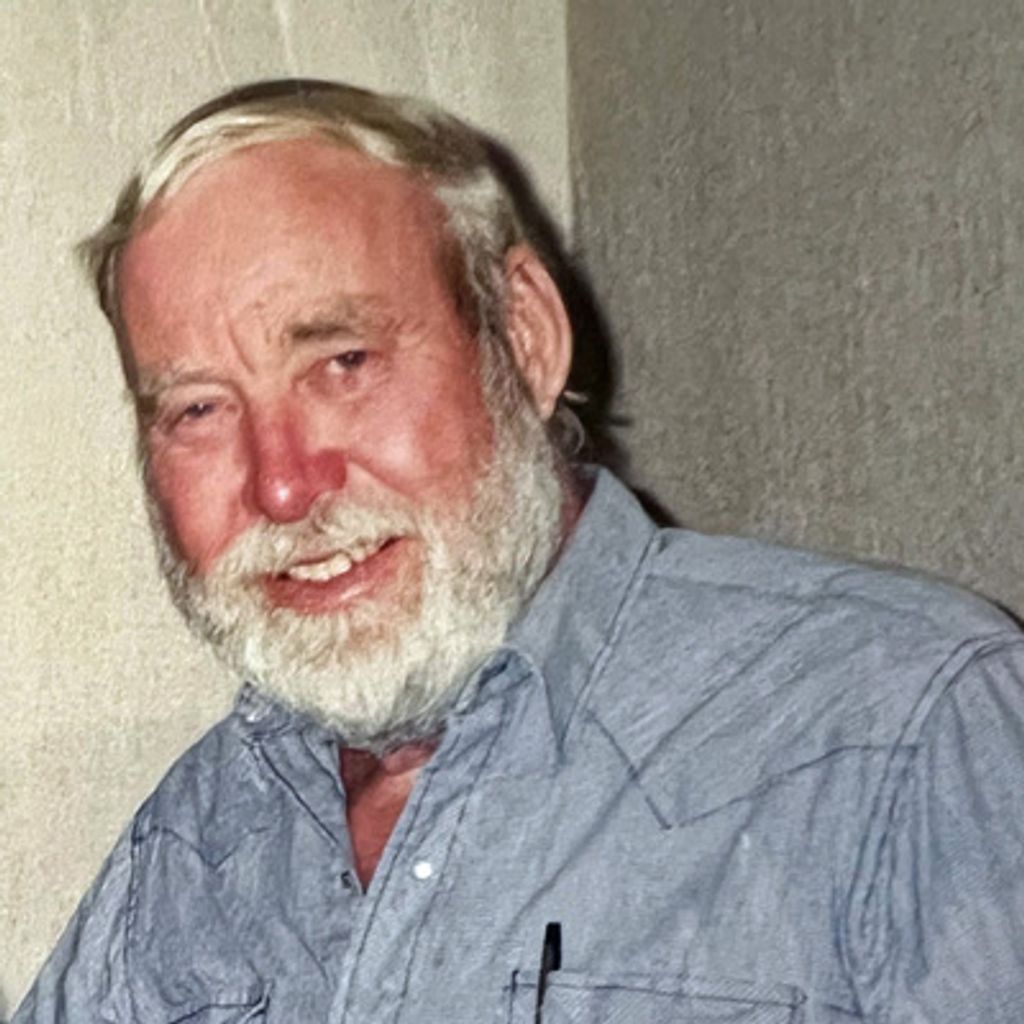
IN LOVING MEMORY OF Robert P Jones
Robert P
Jones
Mar 17, 1936 — Jan 8, 2024
MARATHON
Robert P Jones' Obituary
Robert Paul Jones, 87, passed away at Baptist Health Fishermen's Community Hospital in Marathon, Florida, on the evening of January 8, 2024.
He was born at Horton Hospital on March 17, 1936, and grew up on the family farm, homesteaded in 1857 by his great-grandfather. Young Bobby never tired of hearing the story: Owen Jones, a Welshman, 29, had come to the Kennekuk post office and general store with his young family, household goods, two yoke of oxen and four cows seeking a piece of land to homestead. An itinerant minister recommended a quarter-section a mile and a half to the northeast that had a spring and a stand of timber on it—oak and walnut. Another man, a judge, advised a claim to the south. Owen favored the first, and staked his claim the next morning. He and his wife, Gwendolyn, and their first two children spent that initial winter in a covered wagon (wheels removed) sheltered in a draw of the timber near the spring, but over time they thrived.
When he was four or five, Bobby and his older sister Margaret liked to visit that little spring and shape miniature animals and houses out of the nearby clay.
Bobby attended the one-room Mound Valley schoolhouse on Highway 73. There, at a pickup baseball game against a neighboring country school, he first met Ken Koger, who would become a lifelong friend. Bobby often walked home from school with Harold Bennaka, a year younger, whose parents lived up the road east. To pass the time on the two-mile walk, the two would bounce a sunflower ahead of them on the hard-packed gravel road as they walked, holding it by the stalk, in a contest to see which one's sunflower head would break off first.
When Bobby got a speedometer for his bike, daredevil Harold rode on its handlebars as Bobby pedaled down the steep Kennekuk Cemetery hill. Harold wanted to see for himself what speed the speedometer registered—he doubted Bobby's claim of 50 m.p.h. but came away convinced. (Whether the speedometer was accurate is another matter.)
The Rock Island line cut through the length of the Jones farm, not quite two miles, on a slight upslope from west to east. Lying awake at night, Bobby could hear the steam locomotive struggling against that gradient, a half-mile to the north. As he described it, it went "WHOMP!!! … WHOMP!!! … WHOMP!!!" He thought it sounded like a giant's footsteps crossing the land, making it shudder.
As a youth, Bob relished going for airplane rides with his Uncle Hugh, who piloted a two-seater. Once, Hugh landed in the hayfield east of the lane beyond the barnyard, and Bob and his father, Claude, had to pick up three loads of hay bales before Hugh had runway enough to take off again.
Claude constructed a basketball backboard and homemade hoop above a spacious planked platform up in the barn's hayloft so Bob could practice shooting. It paid off, as Bob, at 6'4", started at center for Horton High, graduating in '54. At a banquet a few years later his coach, John Putnam, remarked to him that Bob had never lost a tipoff. Before the opening tip, guard Bill Hudson would sometimes throw Bob a wink, and Bob would tap the ball to the side as Hudson raced by, grabbed it and burst through defenders to score.
Like his father before him, early in life Robert began building and adapting, trading and improvising. From an article in Popular Mechanics, while in high school Bob built a boat out of Fiberglass in the front room of the farmhouse and tore out part of the wall to get the boat out. He attached a motor and took the boat out for spins on Mission Lake with Sam and Tom Gaskell. (A picture window replaced the missing wall section.) The three also modified a '32 Ford coupe that they entered in area dirt-track races, usually winning. (The car eventually wound up junked out in an overgrown creek south of the house but mysteriously disappeared and has not been seen in decades.)
Bob had a small cannon, about 18 inches long, that his dad had found at the Horton dump, that Bob thought must have been fashioned by an ironworker in the Rock Island shops in his spare time. Now and then, he and Koger would shoot it off downtown or at Mission Lake after buying blasting potash at Armstrong Sundries. (One time they sent Bob's fiancée, Evelyn, petite and demure, in to buy the potash for firing the cannon. Old man Armstrong, behind the counter, looked her up and down suspiciously when she requested potash. Cocking an eyebrow, he asked, "BLASTING potash?" She admitted yes. He packaged it up and sold it to her.) The town cop had an idea who was behind the mischief but could never catch them at it. In later years, to his children's delight, Bob fired the cannon each Fourth of July.
He met Evelyn Ann Ratzlaff through mutual friends at a wedding and dance in Topeka, and they married in September 1957, setting off from the church in Newton in a glass-topped Ford Crown Victoria. The births of two boys and two girls followed, and the family of six lived in the downstairs of the farmhouse, with Bob's parents living upstairs. Bob, Evelyn and kids attended Zion Lutheran Church in Hiawatha.
Evelyn worked full time as a nurse on the night shift at Horton Hospital, but she and all four children pitched in to help Robert work the farm. Bob served in the National Guard for one stint and enjoyed it, especially the marksmanship contests, but declined to reenlist because the two-week commitment for camp in summer interfered with wheat harvest and placed an undue burden on Evelyn, who was left to run things in his absence with four small children and a full-time job. He also worked as a mechanic at Foster Ford one or two winters with his friend Bill Edman, who would often play guitar in the shop after closing hour.
Early in their marriage, Bob and Evelyn had the chance to purchase land surrounding the farmhouse to the east, north, and west from the Burney family. It stretched the young couple financially, but luckily they proceeded to have two good years of harvest yields, which, with Evelyn's paycheck, got them over the hump and out of danger.
Through oddities he bought at auctions or constructed, Robert gave his children an unorthodox but interesting childhood—you never knew what he would bring home, but it was usually large. On one of the big farm ponds he built, the kids paddled a rowboat made of two 1940s snub-nosed car hoods welded together. Down country roads, they rode a World War II Army surplus Cushman motor scooter and drove a pair of pint-sized Japanese pickups.
In 1967, Bob purchased a massive old pontoon boat in disrepair. With the whole family helping on the project, he filled the three-foot-high cast-iron pontoons with foam to make it float, built a plywood cabin with a corrugated tin roof, winched it onto a flatbed truck, and hauled the thing to the Tuttle Creek Reservoir marina, where it attracted as much attention as the Loch Ness Monster might have.
Near the farm's corncrib he built a lookout tower for his children, sinking four poles to support a platform 10 feet high, with a ladder as well as a knotted rope attached to the frame for climbing up to it, and a wall on one side for a self-built basketball goal. Summer weekends the family went camping and boating, and one time Bob tried—unsuccessfully—to pull all four kids up on skis at once with the Larson outboard. The motor wouldn't do it.
During harvest he sometimes ran the combine till midnight, but after the 1978 death from sudden illness of his son Allen, who had already begun farming with him, Robert largely relinquished the operation of the farm, which had never been his passion. In its place, he pursued buying and selling heavy earth-moving equipment—Caterpillar D8s and such—at Forke Brothers auctions, while renting the crops out. Using the trade journals, he was good at assessing the value of used equipment, and his mechanical aptitude allowed him to spot most any problem and fix it. (He wore a trademark leather cowboy hat with enamel pins in it to make himself easily recognizable to the auctioneers.) Sometimes traveling with his good friend Dean Oaks, he long-haul-trucked the equipment from the Louisville auctions back to the farm on a lowboy semi-trailer. With the bulldozers and scrapers, he pushed out trees to expand tillable acreage, shaped terraces to prevent erosion, built 13 ponds on the farm and stocked them with fish, and cut channels to straighten the winding course of Otter Creek until a government regulation prevented it. He was more at home in the seat of a dozer than he had ever been on a tractor.
Prompted by inheriting his dad's collection of Winchester rifles, in the '80s and '90s he and Evelyn also began attending gun shows around the country, where he traded the Winchesters off to deal instead in tiny derringer pistols such as a gambler might hide in his boot, and which he could easily carry in a gym bag.
At one show he met Con, a New Zealander with a dairy farm, and that friendship led to journeys to New Zealand and Australia with Evelyn and Ken and Chris Koger, and many colorful encounters with Aussies. He had a hankering to visit Alice Springs, a oasis town 3,000 kilometers into the Outback, taking 32 hours from Brisbane. Following an Aussie's advice to never pass a petrol station without topping off and to get clear off on the shoulder when the giant truck-trains came barreling past, they made it safely to Alice Springs and back.
After several winters spent exploring Las Vegas, he and Evelyn for the last 30 years had wintered in the Florida Keys, in a low-slung house with a broad patio on a bay of the Atlantic, where he could dock his sailboat and watch boats come and go while sipping his morning coffee. The house had been built by a Massachusetts politico, with whom former president Harry S. Truman used to play poker there at the round table in the living room after driving up from Key West. Robert savored the laid-back Keys lifestyle and made friends easily in Marathon.
As a farmer, he was attuned to clouds and sunsets, and, even as he lay in a Miami hospital bed after the first of this year, would notice and describe particular shapes in the clouds.
Robert is survived by his second son, Benjamin Clay Jones (wife Irma), of Kalamazoo, Michigan; his daughters, Beth Louise Rizza (husband Andrew), of Georgetown, Texas, and Sarah Lynn Jones, of Lake Ozark, Missouri; grandchildren Shawn (wife Pam) Rizza, Grace (husband Mark) Kucza, Luke (wife Jess) Rizza, Zach (wife Katie) Rizza, and Will Rizza; and great-grandchildren Kate Rizza, Harper Rizza, and Otis Kucza.
(Once warmer weather arrives, a graveside service will take place at Kennekuk Cemetery, on a hilltop a half-mile west of the farmhouse. In lieu of flowers, the family suggests mourners wishing to do so can make a memorial contribution to their favorite charity.)
Robert was preceded in death by his parents, Claude and Ruby Banning Jones; sister, Margaret Gaskell; and eldest son, Allen Mark Jones. His wife, Evelyn, passed away last September; he had devotedly taken care of her during the last eight years of her life, when she suffered from dementia. They had been married 66 years—a span of longevity that would have merited their being mentioned as "today's longstanding newlyweds" on Paul Harvey's national radio broadcast, which, for so many years, they had listened to at noon every day during dinnertime on the farm, when Robert had come in from the fields.
Robert P Jones' Guestbook

Visits: 27
This site is protected by reCAPTCHA and the
Google Privacy Policy and Terms of Service apply.
Service map data © OpenStreetMap contributors